Transcripts
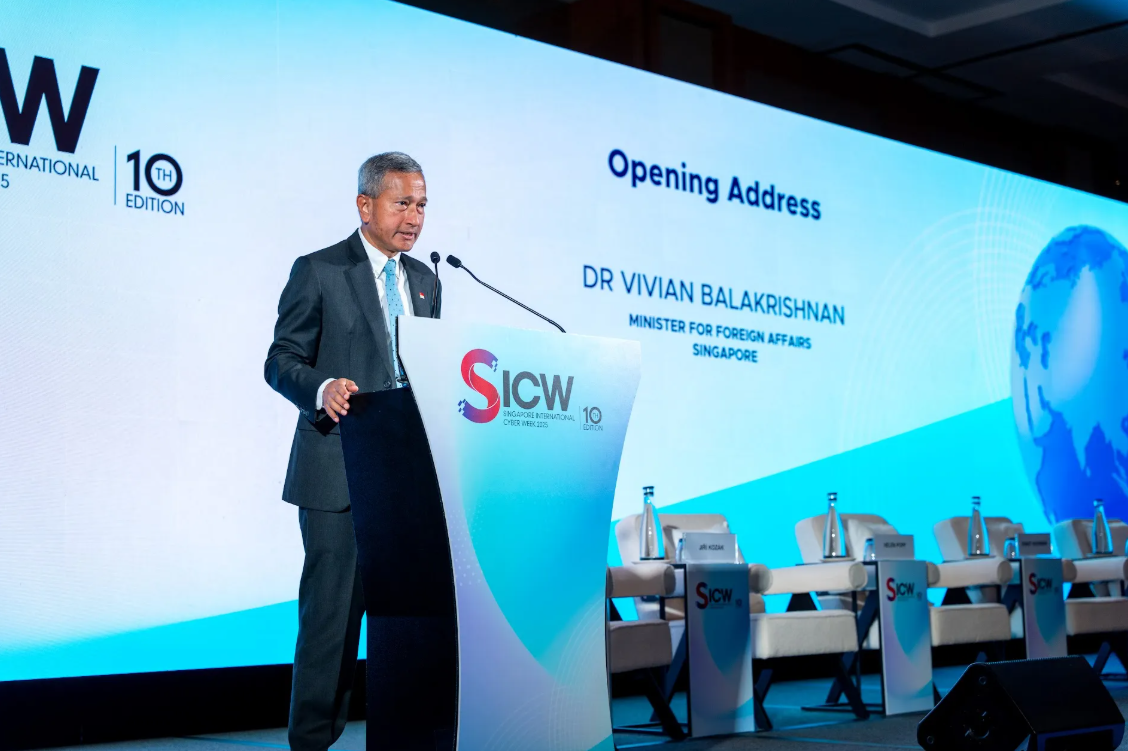
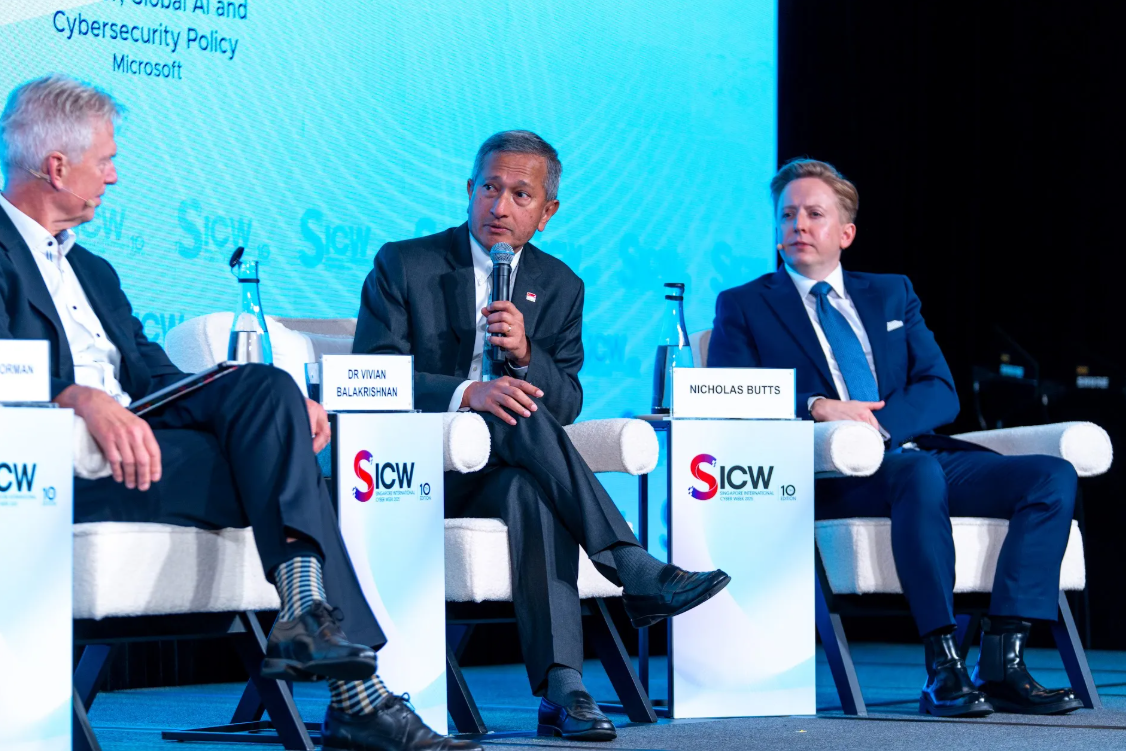
Opening Address by Minister for Foreign Affairs Dr Vivian Balakrishnan at the Singapore International Cyber Week, 23 October 2025
Country
Singapore
23 October 2025
Good morning, everyone. Thank you for joining us here this morning. It’s a pleasure for me to be here. I believe this is the fourth day of the SICW. Cyberspace has become a borderless fabric that...
This article has been migrated from an earlier version of the site and may display formatting inconsistencies.
1 Good morning, everyone. Thank you for joining us here this morning. It’s a pleasure for me to be here. I believe this is the fourth day of the SICW.
2 Cyberspace has become a borderless fabric that enables us to observe, to communicate, to mobilise, and to transact at scale and at a speed which is unprecedented. If you think about what happened on the streets around Singapore two weeks ago, we had the F1 race. Many people think of driving quickly as requiring a powerful engine. But I would add that there are other elements that are essential. You also need good brakes if you’re going to drive quickly. You need a driver with quick reflexes. And another element which is often underestimated in order to drive safely on the road or on the high seas or to fly in the air- you need a highway code. You need rules of the road to avoid collisions, to ensure safety and for us to conduct all the essential activities.
3 Cybersecurity, in a sense, represents the brakes. It also, through its normative processes which this conference includes, is also a means for us to generate the norms, the rules, the codes needed for these activities to be conducted effectively and safely.
4 I just want to make three quick points this morning. First point is that cybersecurity has become yet another domain of the global commons. The global commons refer to areas which by definition are beyond borders; by definition, issues and problems which are beyond the aegis of a single actor or single state to control or to deal with. And examples in history include, for instance, pandemics, climate change, social and political movements and developments in response to industrial revolutions. For instance, the welfare state; social security. And in a sense, because we are now in a technological age, this is yet another arena where the global commons and cybersecurity is one key burning issue. So that’s the first point. It is an issue of the global commons.
5 The second point is that we need a multilateral approach. And since the United Nations in essence reflects the apex multilateral body, it is essential that we recognise that there is a role for the UN which is still the only organisation that encompasses all state actors and increasingly also non-governmental organisations. And also a voice and a forum for civic discourse and for non-government organisations reflecting views from the broad spectrum of society.
6 Singapore is very proud of the fact that our Permanent Representative to the UN Mr Burhan Gafoor chaired the Open-Ended Working Group over the last four to five years. It’s amazing that even in these fractured times, the OEWG was able to land agreement by consensus. If you think about it, to achieve this at a time like what we are currently experiencing on global affairs is a major achievement. The agreements included developing a Global Points of Contact Directory, which serves essentially as an emergency hotline system in the event of urgent ICT incidents. They were also able to adopt eight Global Confidence-Building Measures to enhance mutual transparency, understanding and ultimately build a level of confidence that enables interoperability. Most importantly, we also agreed to establish the UN Global Mechanism on ICTs Security, which will continue our collective norm-building efforts in this domain.
7 My third point is that recognising that this is an issue of the global commons, recognising the role of the UN is essential but not sufficient because we know that when problems arise, the states and the stakeholders who will be most at risk will be by definition those who are less equipped, with less infrastructure, with less capacity to deal with emergencies and problems as and when they arise. And that’s why my third point is the essential need for capacity building.
8 After all, cybersecurity is only as strong as its weakest link, and especially for small and developing states, the stakes are particularly high as these emerging platform technologies threaten to widen the digital divide, increase vulnerabilities, and it is essential for small states to have access to capacity building programmes and that they have a voice on global fora on developing digital governance, building cyber resilience against malicious actors and access to the tools to effectively navigate digital transformation. In a sense, it's the old analogy of “a chain is only as strong as its weakest link”, and it is in our collective interest to enhance the capacity of everyone and in particular, focus on the most vulnerable.
9 Earlier this week, we announced the renewal of our UN Singapore Cyber Programme, which is organised in collaboration with the UN Office of Disarmament Affairs. The UN Singapore Cyber Fellowship has benefited 140 participants from 97 countries since its inception in 2022, and I hope that this will be the first of many capacity building programmes.
10 In February 2024, ASEAN member states agreed to establish the ASEAN Regional Computer Emergency Response Team, which will be funded and hosted by Singapore. It will enhance our collective ability to respond to cyber threats by coordinating the cybersecurity incident responses across all ASEAN member states. And these are practical measures to manage cyber incidents, and we hope it will also foster broader regional stability and in turn, turbocharge the economic and social contributions of these technologies in all ASEAN societies.
11 Looking ahead, the accelerating advances in AI, quantum computing and the Internet of Things will continue to dramatically reshape our landscape, and our governance frameworks must adapt. They must take a prospective view, and they must be capable of addressing today's threats and tomorrow's uncertainties. The frameworks we build today can mitigate the risks, can promote cyberspace as a catalyst for human advancement and dignity, but these frameworks can only deliver lasting security when matched with political will and operational capability.
12 Singapore remains steadfast in our belief that international cooperation grounded in international law and guided by shared emerging norms offers the most practical path forward. We commit to working closely with all our international partners and stakeholders to advance these policy discussions, governance frameworks and practical solutions that will preserve international peace and security in cyberspace.
13 I look forward to the discussions and I hope we’ll have some robust set of questions to follow in the session. Thank you all very much.
. . . . .